DESIGNED AROUND YOUR BRAND
How to budget corporate gifts per recipient
A corporate gift budget is set per recipient, not per item: the total is divided across tiers of recipients, and each tier is given a per-head figure that covers the item, its branding, its packing and its share of dispatch. Working this way keeps a national list affordable because the mass tier is sized for reach while the senior tier is sized for impression.
Start from the list, not the catalogue
Count the recipients and sort them into tiers before looking at products. A typical national company has three or four: directors and key clients (tens), managers, partners and doctors (hundreds), all employees or dealers (hundreds to thousands) and trade counters or event guests (thousands). The tiers are defined by relationship and by how visible the gift is, not by designation alone.
Only then attach a budget band to each tier. The bands below are relative — ₹ to ₹₹₹₹ — because the actual per-piece figure depends on quantity, material and the season's paper prices; the ratio between tiers is what matters, and a senior tier at roughly four to eight times the mass tier per head is usual.
Quantity bands and the per-piece curve
Set-up costs — design, dies for foil or deboss, plates or screens, a sample — are fixed per design, so the per-piece price falls as quantity rises and flattens after a point. For diaries and table calendars the minimum is 100 pieces and the curve flattens around 500 to 1,000; for wall calendars the minimum is 1,000 and the useful saving runs to 5,000. Splitting a 1,000-piece order into five designs of 200 costs more than one design in five quantities.
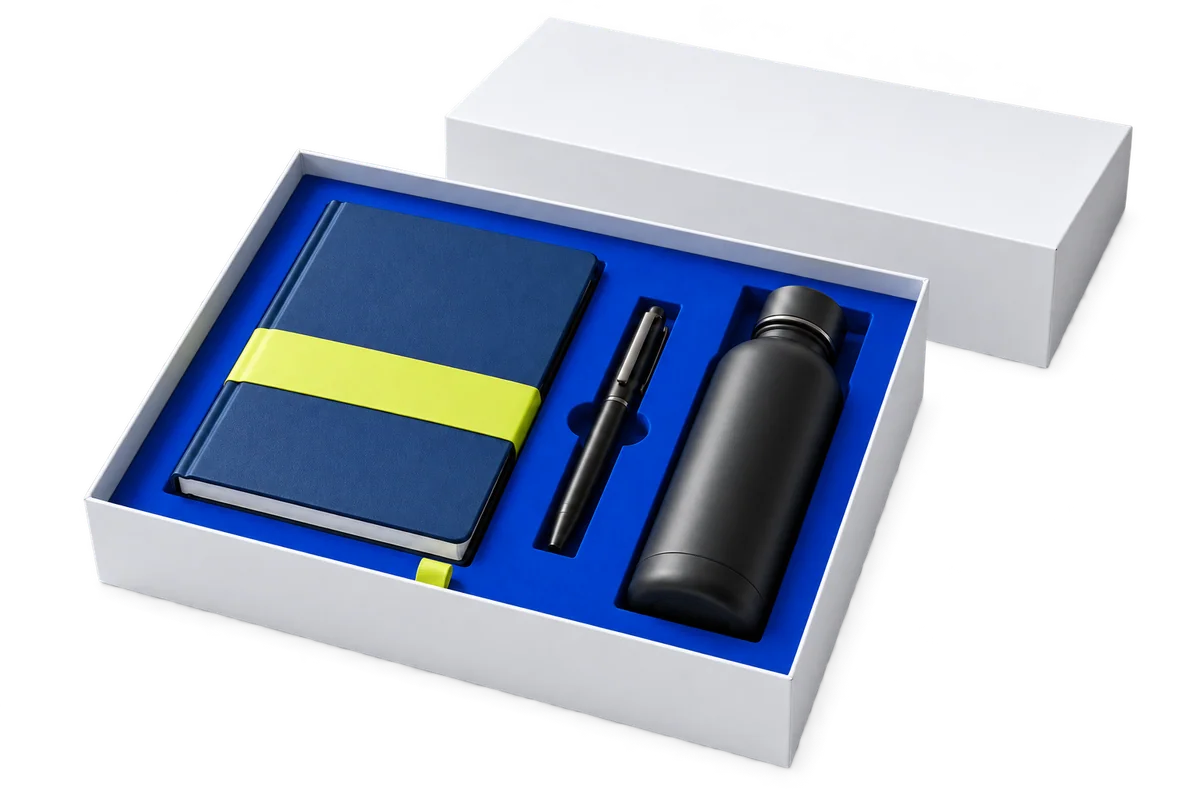
This is the case for one artwork across tiers: the design, die and proof are paid once, and the tier changes the cover material or the pen, not the branding set-up. The ranges per tier are listed on the New Year corporate gifts 2027 page.
What moves the per-piece price
In descending order of effect: the cover or body material (genuine leather, PU leather-finish, printed board), the format (dated B5 against undated A5, 13-sheet against 6-sheet), the number of colour pages or printed faces, the branding method and number of positions (foil and deboss need a die; UV and print do not), extras such as magnetic flap, ribbon, pen loop or name personalisation, and finally the box.
Two things are often overlooked. Individual name personalisation is cheap per piece but adds a checking step and a sorting step at packing; and a printed magnetic box can cost as much as a budget diary. Decide both deliberately per tier rather than by default.
Packing and dispatch are part of the budget
Per-recipient packing — a sleeve, kraft box or magnetic box, a greeting card, a name slip — adds a small fixed amount per set plus labour. Branch-wise packing adds cartons, labels and a packing list per office. Neither is large on its own, but a 2,000-set national order with 40 destinations carries a real logistics line that should be budgeted, not discovered on the invoice.
Dispatch from Lucknow by courier is fastest (1–3 working days to the north, 2–4 to the west and east, 3–5 to the south) and best for sets going to many offices in small numbers. Transport or part-load is far cheaper per kilogram for heavy lots of diaries or wall calendars to a single depot and adds two to four days. GST is charged separately on the invoice, so compare quotes pre-tax.
Where to spend and where to save
Spend on the item that is used every day — the diary — and on the branding method that suits the material, because a crisp deboss on good PU reads as premium regardless of what else is in the box. Save on the box for the mass tier, on extras that are rarely used (pen loops, back pockets), and on calendar sheet count where one brand image is all you have to say.
Do not save by cutting the sample. A couriered sample before a 2,000-piece run costs a week, not money, and catches the colour, paper and cover problems that a PDF proof hides. The split between what employees and clients should receive is covered in employee gifts vs client gifts; the material choice in PU leather vs genuine leather diaries.
At a glance
| Tier | Usual quantity | Budget band per head | Typical set | Branding |
|---|---|---|---|---|
| Directors and key clients | 10–100 | ₹₹₹₹ | Leather-finish or genuine leather diary, metal pen, 13-sheet table calendar, magnetic box | Deboss or foil, laser on pen |
| Managers, partners, doctors | 100–1,000 | ₹₹₹ | PU leather-finish dated diary, metal pen, 12-sheet table calendar, sleeve | Foil or deboss, laser |
| All employees | 200–5,000 | ₹₹ | Standard customised-cover diary, 6-sheet table calendar, printed pen | Full-cover print, pad print |
| Dealers and distributors | 500–10,000 | ₹–₹₹ | Budget customised-cover diary or 6-sheet table calendar, printed pen | Full-cover print |
| Trade counters, clinics, event guests | 1,000+ | ₹ | Wall calendar 17 × 22 or A5 undated notebook | Full-colour print |
Questions buyers ask
How much should a company spend on corporate gifts per person?
Set it per tier rather than per person: a senior tier at roughly four to eight times the mass tier per head is usual. The absolute figure follows your total budget divided across the tiers by headcount.
Does ordering more really bring the per-piece price down?
Yes, because design, dies, plates and the sample are fixed per design. The curve is steep up to a few hundred pieces for diaries and calendars, and up to several thousand for wall calendars, then flattens.
Is a gift box worth it?
For the senior and manager tiers, usually. For the mass tier a printed sleeve or poly bag protects the diary in transit at a fraction of the cost and is discarded either way.
How much do packing and dispatch add?
A small fixed amount per set for the box or sleeve plus labour, and a logistics line that scales with the number of destinations. Budget it at the planning stage, especially for 20 or more offices.
Should the budget include GST?
Quotes are per piece before GST, which is charged separately on the invoice. Compare suppliers on the pre-tax figure and keep GST as its own line in the budget.
Related pages
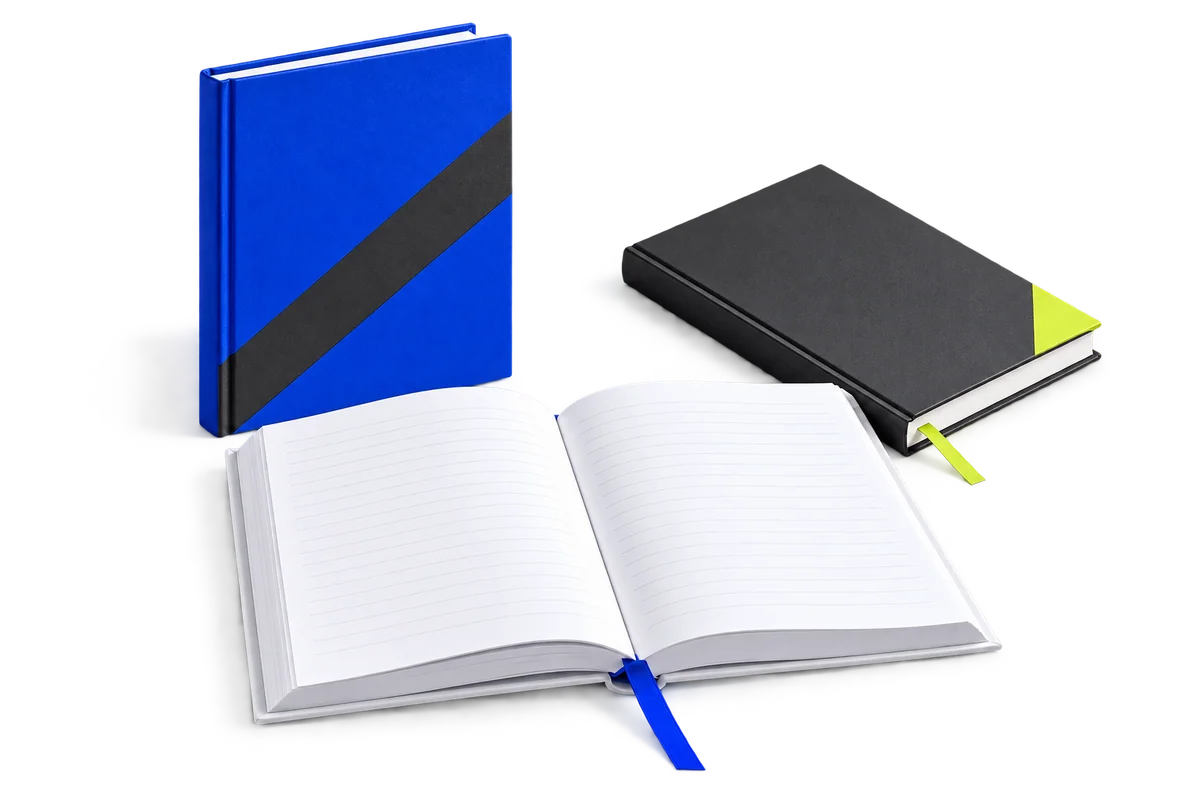
- Employee gifts vs client gifts: what changesHow employee gifts differ from client gifts: quantity, budget band, personalisation, packing, logo prominence and timing, with a side-by-side table.
- New Year Corporate Gifts 2027Diary, calendar and pen sets for January 2027, packed per recipient and per city.
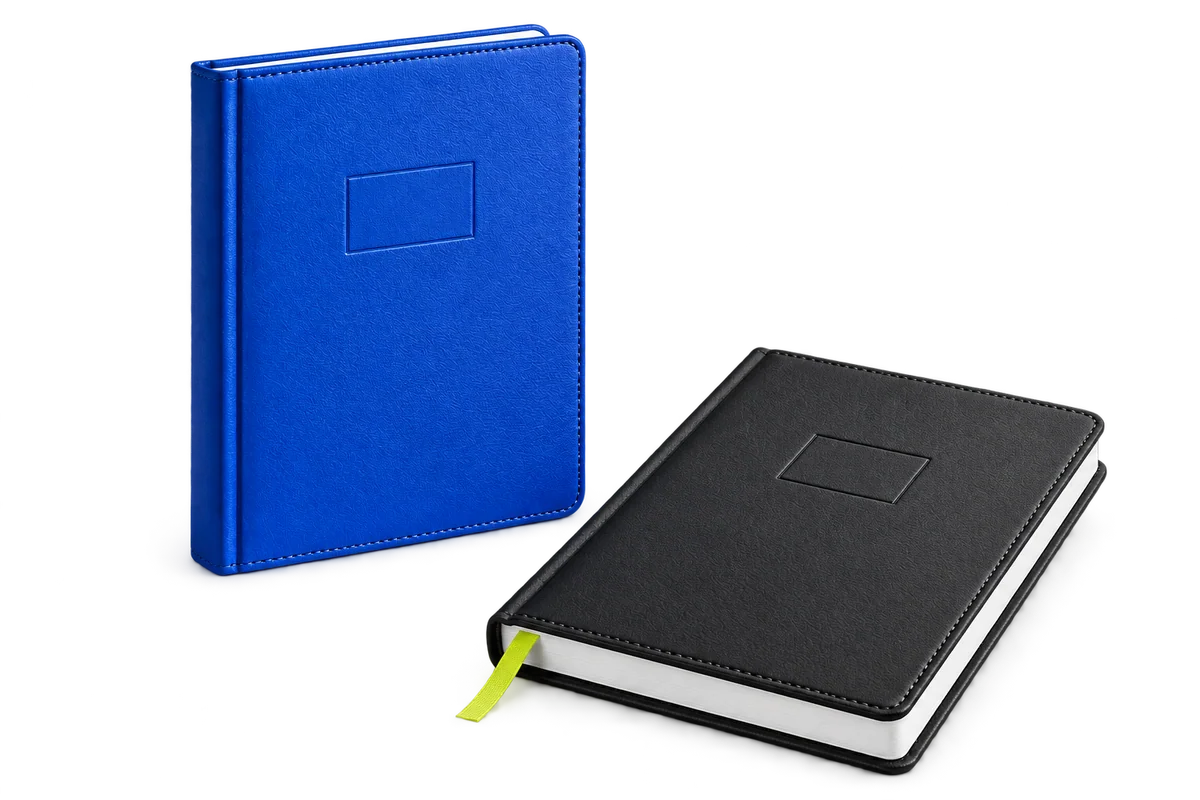
- PU leather vs genuine leather diariesPU leather and genuine leather diaries compared: feel, cost band, logo methods, how each wears over a year, and which suits clients, staff and dealers.
- When to order 2027 diaries and calendars: a week-by-week timelineWeek-by-week timeline, Oct–Dec 2026, for ordering 2027 diaries and calendars: artwork, sample, 5–10 day production, zone-wise dispatch, January handover.
More guides
- Diary sizes, paper and GSM explainedA4, B5, A5 and A6 diary sizes in mm, what 70 GSM paper means, realistic page counts, hardbound versus wiro binding, and which extras are worth paying for.
- PU leather vs genuine leather diariesPU leather and genuine leather diaries compared: feel, cost band, logo methods, how each wears over a year, and which suits clients, staff and dealers.
- Table calendar formats: 6, 7, 12 and 13 sheeters explainedWhat 6, 7, 12 and 13-sheet table calendars carry, single-side versus front-and-back printing, stands, 300 GSM lamination and how to plan the artwork.

- Corporate calendar design ideas for 2027Design ideas for 2027 corporate table and wall calendars: twelve-month themes, legible date grids, festival marking, product-per-month and logo placement.
- Corporate gifting guide: what to give, how to brand it, when to orderItems, budgets, logo methods and timing.
BEFORE YOU ORDER
Turn this guide into a clear specification
Choose the essentials
Note the format, recipient and features that matter to this order.
Compare like for like
Keep size, quantity, material, branding and packaging consistent when comparing quotes.
Approve the details
Check the artwork and written specification together before production.