BUSINESS PRINT & STATIONERY
Bill book and order book printing in Lucknow
A printed bill book is a numbered pad of two- or three-part sets on carbonless paper — the first leaf for the customer, the copies beneath for your records — with your business name, address, GSTIN and the columns your accountant wants on every leaf.
We print invoice books, order books, delivery challans and receipt books for traders, transporters, clinics and dealers across Lucknow, in series that continue from one reprint to the next. Minimum 100 books; ready 5–10 working days after the proof is approved.
An unglamorous product, and one of the few that every trading business in the city reorders without being asked. This page covers the kinds of book, the fields that go on them, how numbering works, and how a reprint is kept identical to the last one.
Four kinds of book, one way of making them
Whatever the trade calls it, the product is the same: a pad of numbered sets, each set made of two or three leaves of carbonless paper, so that what is written on the first leaf appears on the ones beneath without a loose carbon sheet. The first leaf goes to the customer; the second stays in the book or goes to accounts; a third, where there is one, travels with the goods.
The four briefs we see most are the invoice or bill book, with the GST fields and tax columns your accountant asks for; the order book, used by dealers, distributors and showroom counters to record what a customer wants before it is billed; the delivery challan, which moves with the consignment and is signed on receipt; and the receipt book, for clinics, schools, coaching centres and trusts that take money against a numbered acknowledgement.
Estimate pads, workshop job cards and gate-pass books are made the same way. If your current book works, send a photograph of one filled leaf and one blank leaf and we reproduce the layout with corrections; if it does not, our design desk draws a cleaner one. Letterheads and visiting cards in the same style are on the corporate stationery page.
What different Lucknow trades order
Budget is relative — ₹ lowest, ₹₹₹₹ highest — and depends on copies per set, book size, quantity and whether the leaves carry a second ink colour.
| Business | Book | Copies | Usual size | Budget |
|---|---|---|---|---|
| Wholesale trader, Chowk or Aminabad | GST invoice book, cash memo | Duplicate or triplicate | A5 upright | ₹ |
| Transporter, Transport Nagar or Alambagh | Delivery challan, consignment note | Triplicate | A5 or A4 | ₹–₹₹ |
| Clinic, diagnostic centre or pharmacy | Receipt book, OPD slip pad | Duplicate | A5 or A6 | ₹ |
| Dealer or distributor | Order book with item and rate columns | Triplicate | A4 or A5 landscape | ₹₹ |
| Contractor or builder's site office | Delivery challan, material receipt | Triplicate | A5 | ₹–₹₹ |
| School, coaching centre or society | Fee receipt, donation receipt | Duplicate | A5 or A6 | ₹ |
The fields your accountant will ask for
We lay out the book; your accountant or GST consultant decides what must be on it. These are the fields that appear on most invoice-book briefs, listed so you can confirm them before artwork begins. Nothing here is tax advice.
- Header block
- Business name, address, phone and email, GSTIN and state code, and the heading your accountant wants — Tax Invoice, Bill of Supply, Cash Memo or Delivery Challan.
- Invoice number and date
- A printed serial number on every set, in the series and starting number you give us, with a date box beside it. Many businesses run a financial-year prefix; tell us how yours reads.
- Customer block
- Name and address of the buyer, their GSTIN where applicable, place of supply, and a line for vehicle number or transport details on challans.
- Item columns
- Description, HSN or SAC code, quantity, unit, rate and amount, set to the widths your items need. A dealer's order book needs a wide description column; a clinic's receipt book needs very few.
- Tax and total rows
- Taxable value, CGST, SGST and IGST columns or rows as your accountant specifies, a total in figures and words, and a round-off line.
- Footer
- Bank details, terms, the E. & O.E. line, a signature and stamp space, and the copy labels — Original, Duplicate, Triplicate — printed on each leaf.
Specification checklist for a bill-book order
Settle these six points and the proof can be made in one pass.
- Duplicate (two leaves per set) or triplicate (three), and which copy each party keeps
- Starting number and series — and whether numbering continues from your current book
- Book size and orientation, and how many sets per book
- The fields and columns above, confirmed by your accountant, or a photograph of your existing book
- Logo file and the ink colour — single colour is usual; a second colour for the header is possible
- Quantity of books, delivery address and the date you need them by
Each book is bound with a card cover and a stiff back board, with sets perforated so the customer copy tears cleanly.
How a bill-book order runs
Brief and existing book
Send the checklist points and, if you have one, a photograph of your current book. An estimate usually follows on WhatsApp the same working day.
Layout proof
usually within two working days: a PDF proof of one leaf at actual size, with serial number, columns and copy labels. Your accountant checks the fields; we correct in two or three rounds.
Numbering confirmed
The starting number, series and sets per book are written on the final proof and approved on email or WhatsApp, so the sequence is on record.
Printing, numbering and binding
A 50% advance confirms the order. Our partner presses print the carbonless leaves and run the numbering; our binding team collates, perforates and binds the books. Ready 5–10 working days after proof approval.
Delivery and file
Hand delivery across Lucknow, courier or transport beyond it. The artwork and the last number printed stay on file for the reprint.
A worked example: a hardware wholesaler's invoice and challan books
This is an illustrative brief, not a client case study. A hardware wholesaler in Aminabad issues around forty invoices a day and sends goods to district retailers by tempo. The brief is for 300 triplicate GST invoice books — fifty sets each, A5 upright, original to the customer, duplicate to accounts, triplicate kept in the book — and 150 triplicate delivery challan books with a vehicle-number line and a receiver's signature box.
The accountant sends the field list and a photograph of the current book, whose columns are too narrow for item descriptions. The proof widens that column, drops one nobody uses and adds bank details to the footer. Numbering continues from the last book in use, with a new financial-year prefix. The proof is approved on the third working day; both lots are delivered to the shop by our team within the usual 5–10 working days after that, in cartons of 25 with the number range on each carton so the counters open them in sequence.
Reprints, numbering continuity and the busy weeks
Bill books run out at inconvenient times, which is why the reorder matters more than the first order. We keep the approved artwork and the last serial number printed on file, so a reprint needs a WhatsApp message with the quantity. The new books continue the series — or start a new financial-year prefix in April if that is how your accountant runs it — and the layout is identical to the last lot, down to the column widths.
Demand is steady through the year, with two bumps: late March, when businesses start a new series for the financial year, and the weeks before Diwali, when traders in Chowk, Aminabad and Nakhas stock up. Reprints in those weeks still take the usual 5–10 working days after proof, so order when the last carton is opened rather than when the last book is.
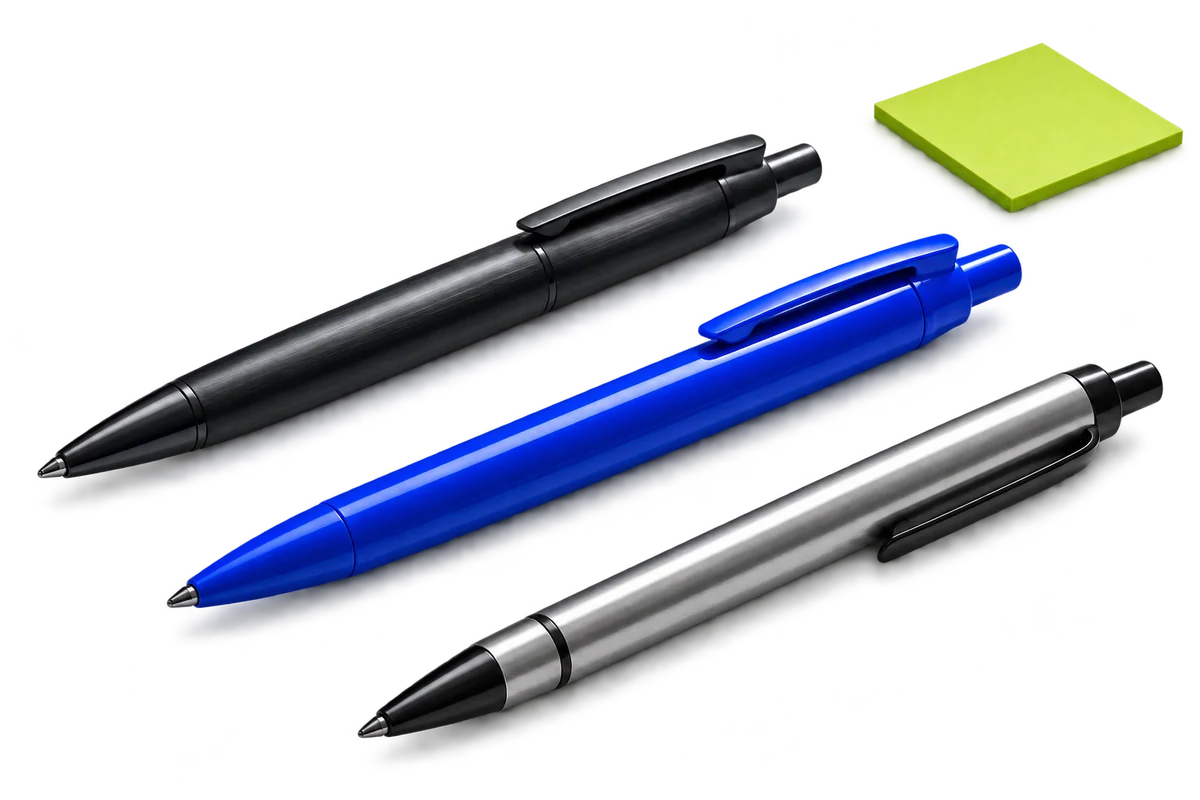
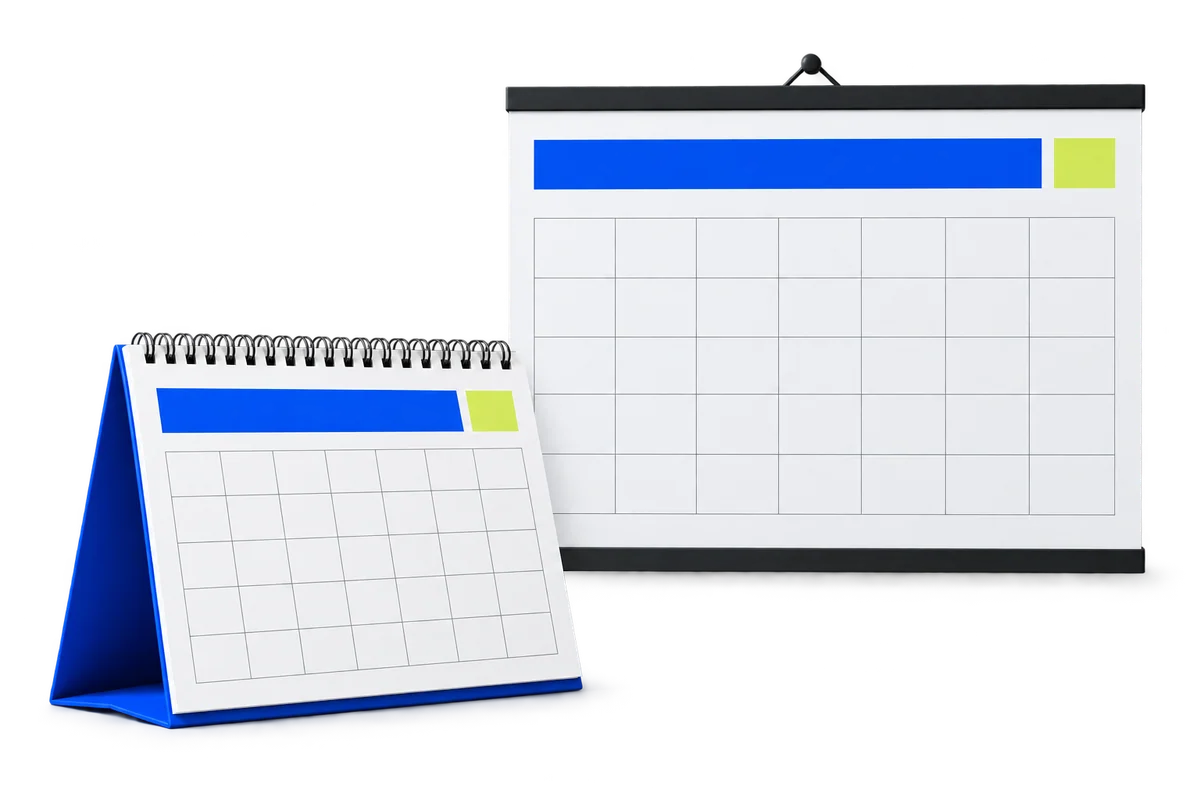
Traders who want something else with their name on the counter usually add printed pens for the billing desk and a table calendar with monthly schemes; both are on the corporate gifts in Lucknow page.
Where bill-book orders come from in Lucknow
Most of our bill-book work is for the old-city trade of Chowk, Aminabad and Nakhas, the transporters and dealers of Alambagh and Transport Nagar, and the clinics, coaching centres and showrooms of Aliganj and Mahanagar near the studio. The remaining localities are on the Lucknow areas page; district customers in Barabanki, Unnao and Sitapur are served by transport.
Two buyer pages overlap with this one: dealers and distributors, who order order books alongside dealer diaries, and hospitals and clinics, whose receipt books follow the same process. How we work sets out proofs, advance and delivery.
Questions about bill books and order books
What is the minimum order for printed bill books?
100 books. A single business usually orders between 100 and 500 at a time, often split between invoice books, challans and order books from one approved layout, since the numbering and binding setup is shared.
Do you print the GST format, and will it be correct?
We print the layout your accountant or GST consultant specifies — header, GSTIN, HSN or SAC column, tax columns, totals and copy labels — and send a proof for them to check first. We lay the book out; we do not advise on what it must legally contain.
How does numbering work, and can it continue from our current book?
Every set carries a printed serial number. You give us the starting number and series — or the last number of your current book — and the new lot continues from it. The approved range is recorded on the final proof and kept on file.
Is carbonless paper better than carbon sheets?
For most counters, yes. Carbonless leaves copy ballpoint writing to the second and third leaf without a loose carbon sheet to lose or smudge, and the copies stay legible in the file. Duplicate and triplicate are both standard.
Can we get a sample before the full order?
Yes. A PDF proof of one leaf at actual size is standard, and a single made-up book can be produced before the bulk run to check the paper, perforation and binding in hand. The full lot follows 5–10 working days after approval.
How long does a reprint take, and do we need to resend the artwork?
No new artwork is needed; the approved file and the last number printed stay with us. Send the quantity on WhatsApp, confirm the starting number, and the reprint is ready 5–10 working days after that.
हिंदी में
लखनऊ में बिल बुक (bill book), ऑर्डर बुक, डिलीवरी चालान और रसीद बुक की प्रिंटिंग — कार्बनलेस कागज़ पर डुप्लीकेट या ट्रिप्लीकेट सेट, हर सेट पर छपी हुई क्रम संख्या। आपके अकाउंटेंट द्वारा बताए गए GST फ़ील्ड — GSTIN, HSN कॉलम, टैक्स कॉलम, कॉपी लेबल — के अनुसार लेआउट, और प्रिंट से पहले PDF प्रूफ़। चौक-अमीनाबाद के व्यापारी, आलमबाग़ के ट्रांसपोर्टर, क्लिनिक, डीलर और स्कूल इन्हें साल भर दोबारा छपवाते हैं; अगली बार नंबरिंग वहीं से आगे चलती है। न्यूनतम 100 बुक, प्रूफ़ मंज़ूरी के 5–10 कार्यदिवस में तैयार, लखनऊ में हाथों-हाथ डिलीवरी। अन्य उत्पादों के लिए हिंदी पेज देखें।
Also for the counter and the office
BEFORE YOU ORDER
A better brief makes a better finished product
Format & print details
Send finished size, page count, paper preference, quantity and any numbering or copy requirements.
Artwork & personalisation
Share a clear logo file, brand colours, spelling and any name list that must be checked.
Quantity, budget & date
Send the order quantity, approximate budget, delivery city and required handover date.